
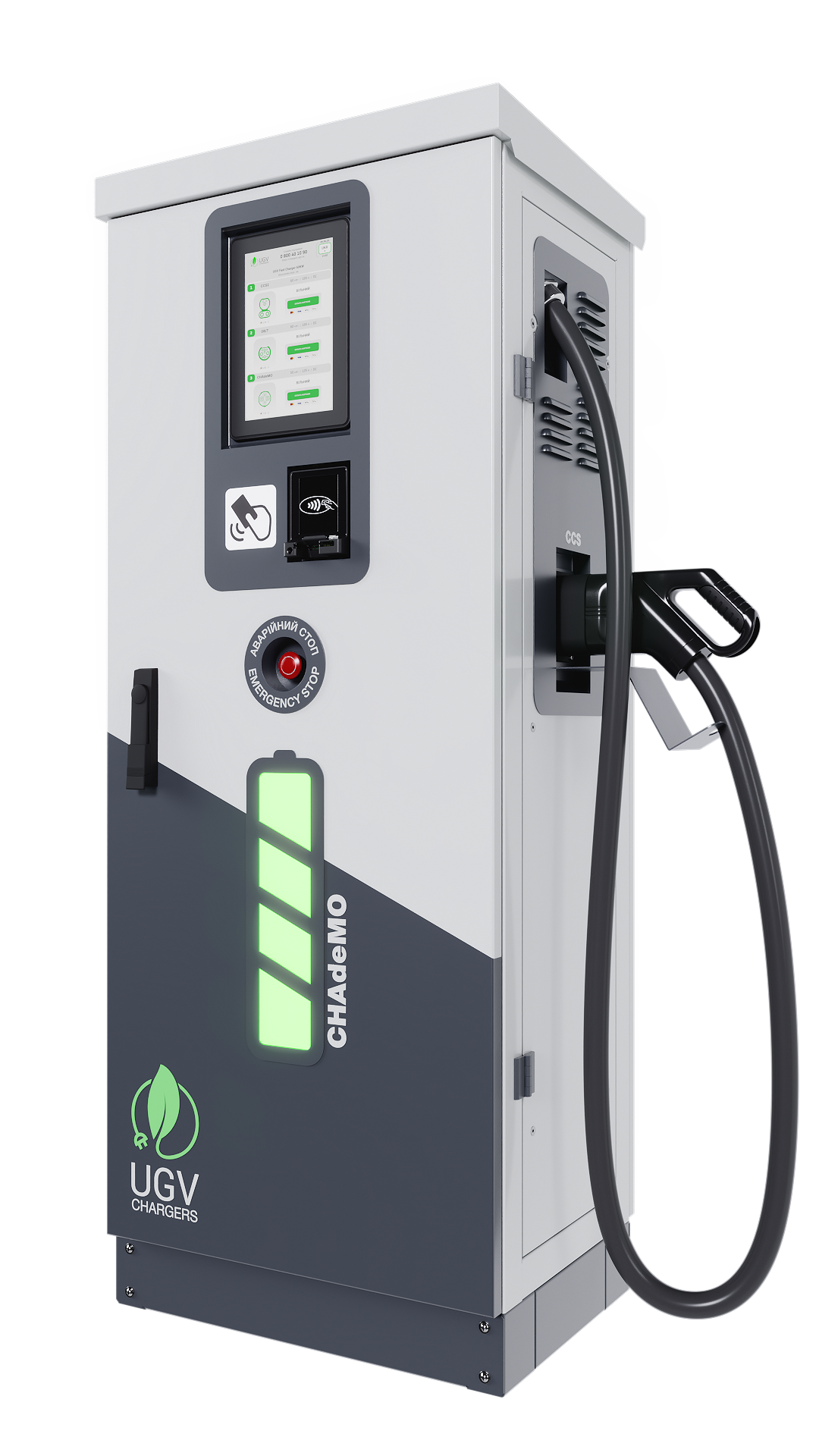
 40 kW
40 kW
UGV Chargers · DC Charging Stations
DC Fast Charging Stations 40–500 kW for Commercial and Public Locations
Choose a DC charging solution based on location type, available electrical capacity and number of vehicles. UGV Chargers offers compact DC stations, multi-port high-power models and combined DC + AC configurations.
Non-binding · you do not need to know the exact model or connector
✓ 40–500 kW
✓ CCS Combo 2
✓ OCPP + RFID
✓ Multi-Port Configurations
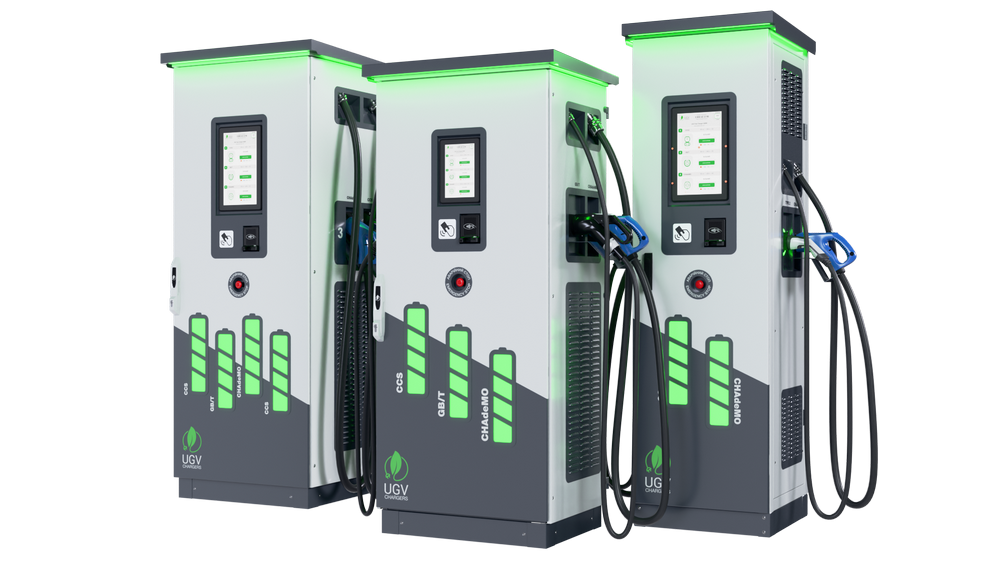
UGV Chargers
DC · DC + AC · 2–4 ports
Start with the Location
What Type of Project Are You Planning?
Charging power is not the first question. We first need to know where the station will operate and how many vehicles it needs to serve.
01
Retail and Shopping Centre
Short to medium stays and public parking.
Recommend Power →02
Fuel Station / Transit
Higher vehicle turnover and shorter stopping times.
Recommend Power →03
Corporate Fleet
Charging based on vehicle schedules and available electrical capacity.
Recommend Power →04
Charging Hub
Multiple vehicles charging simultaneously with high throughput requirements.
Recommend Power →Initial Recommendation
3 Inputs for an Initial Power-Class Estimate
The calculator helps narrow the options. The final design is based on the electrical connection, vehicles and operating scenario.
Initial Recommendation
120–160 kW
Dual-Port DC Charging Station
Suitable for two vehicles charging simultaneously at a commercial location with medium to higher utilisation.
Show Suitable Stations The result is indicative. The final selection depends on the electrical connection, required charging time, vehicles and the site design.UGV Chargers Fast Charging Stations
12 Current DC Configurations
Choose a power class or view all stations. We recommend selecting the final model according to location, electrical capacity and number of vehicles.
Stations Shown: 12

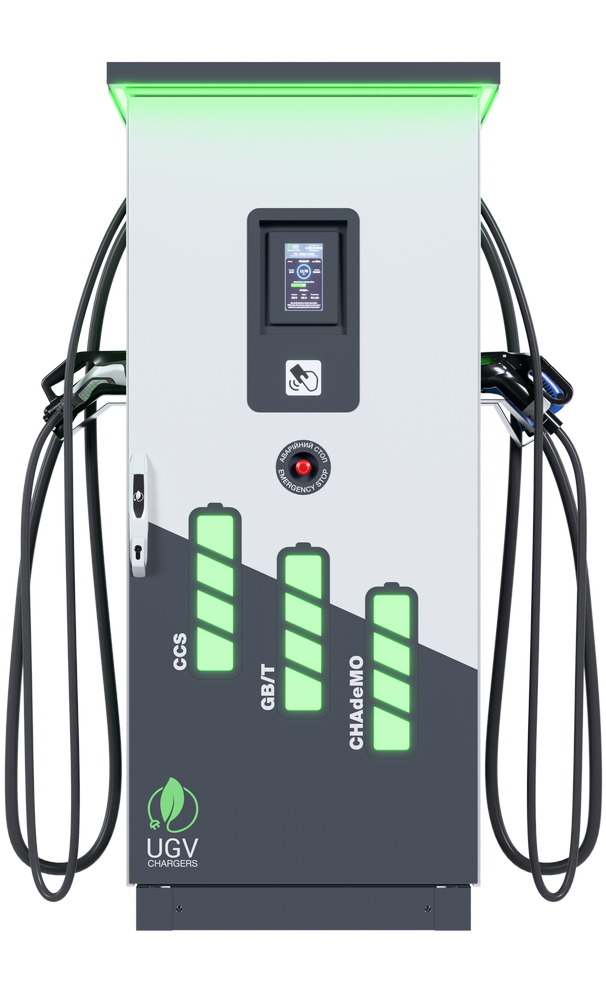

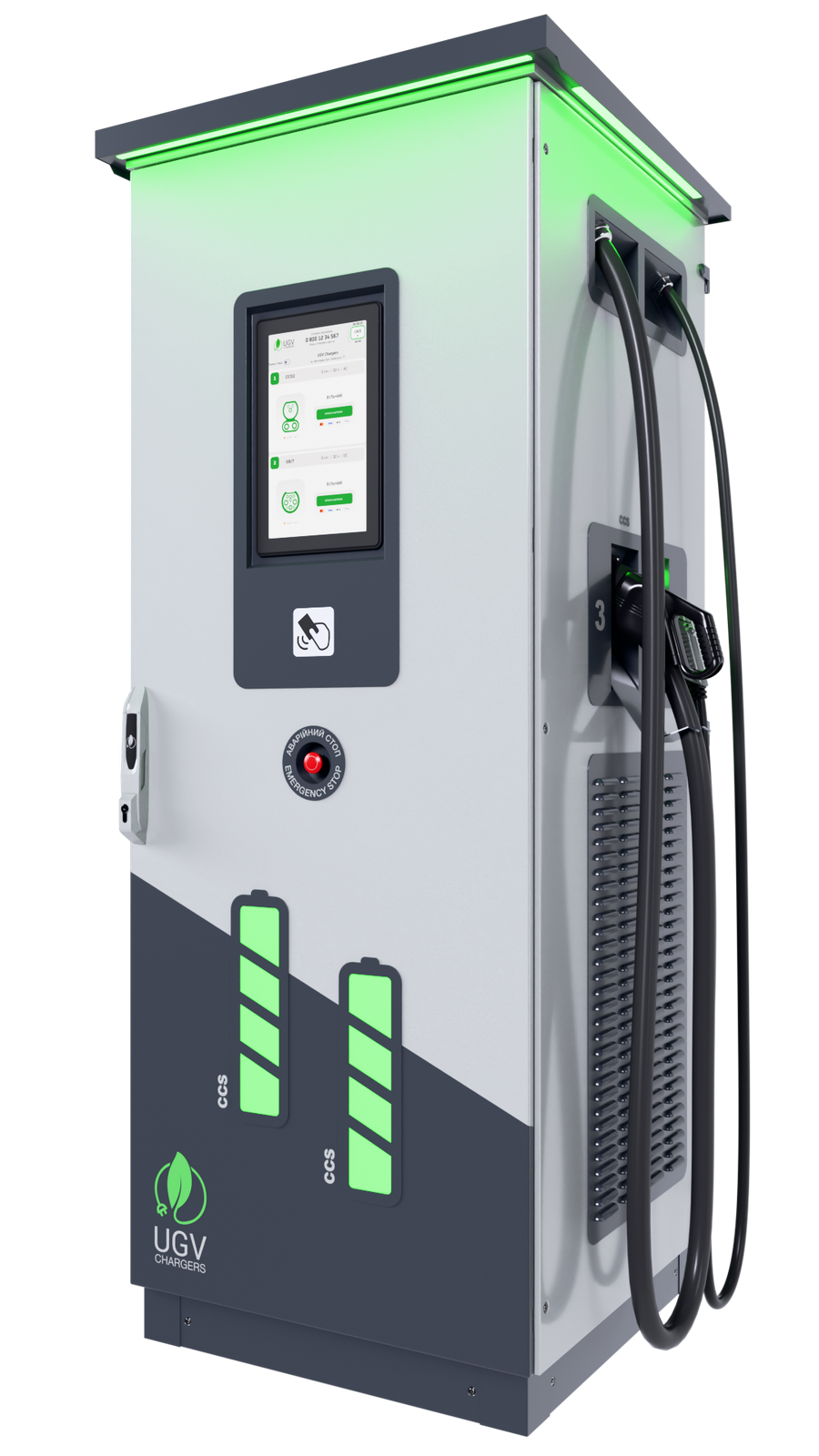

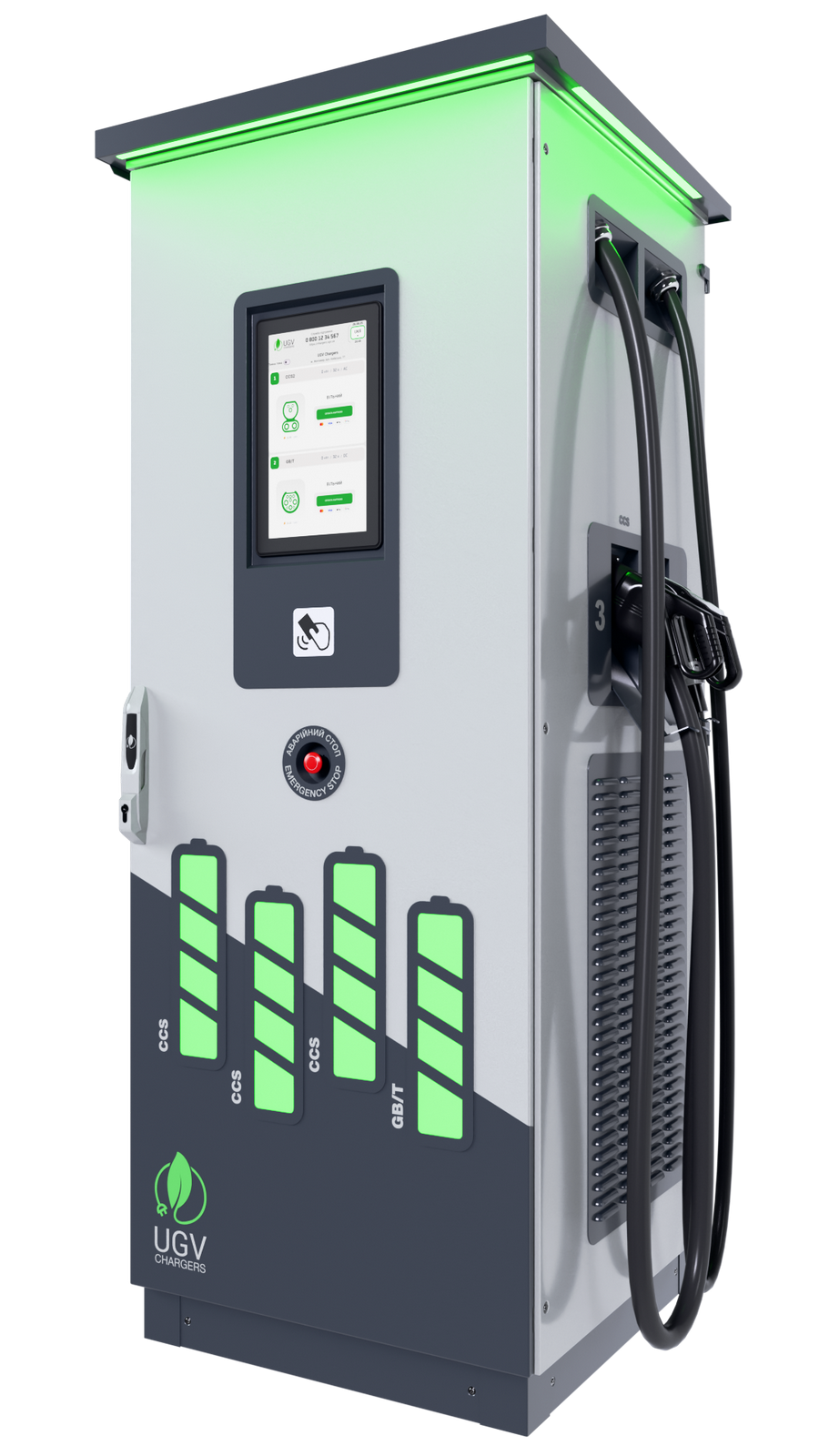
No station matches the selected filter.
Dynamic Power Distribution
Multi-Port DC Stations Can Distribute Power Dynamically
Available power can change according to the current demand of connected vehicles and the system configuration.
Illustrative Example
240 kW DC
240kW
CCS2 · Port 1
240 kW
active charging
CCS2 · Port 2
0 kW
port ready
The displayed values illustrate the principle only. Actual charging power depends on the model, vehicle, charging conditions and system configuration.
1 VEHICLE
Power Where It Is Needed
An inactive port does not necessarily need a fixed reserved share of the power.
2+ VEHICLES
Continuous Redistribution
With multiple vehicles, available power can change according to current demand.
By Power Class
What Do the Different Power Classes Mean in Practice?
40–80 kW
Compact DC Solutions
For locations with lower initial demand or longer parking times.
View Models →120–160 kW
Versatile Mid-Range
For retail, fuel stations, corporate car parks and busier locations.
View Models →240–320 kW
Higher Throughput
For multi-port projects and locations with higher simultaneous power demand.
View Models →360–500 kW
High-power charging
For transit locations, charging hubs and high operating loads.
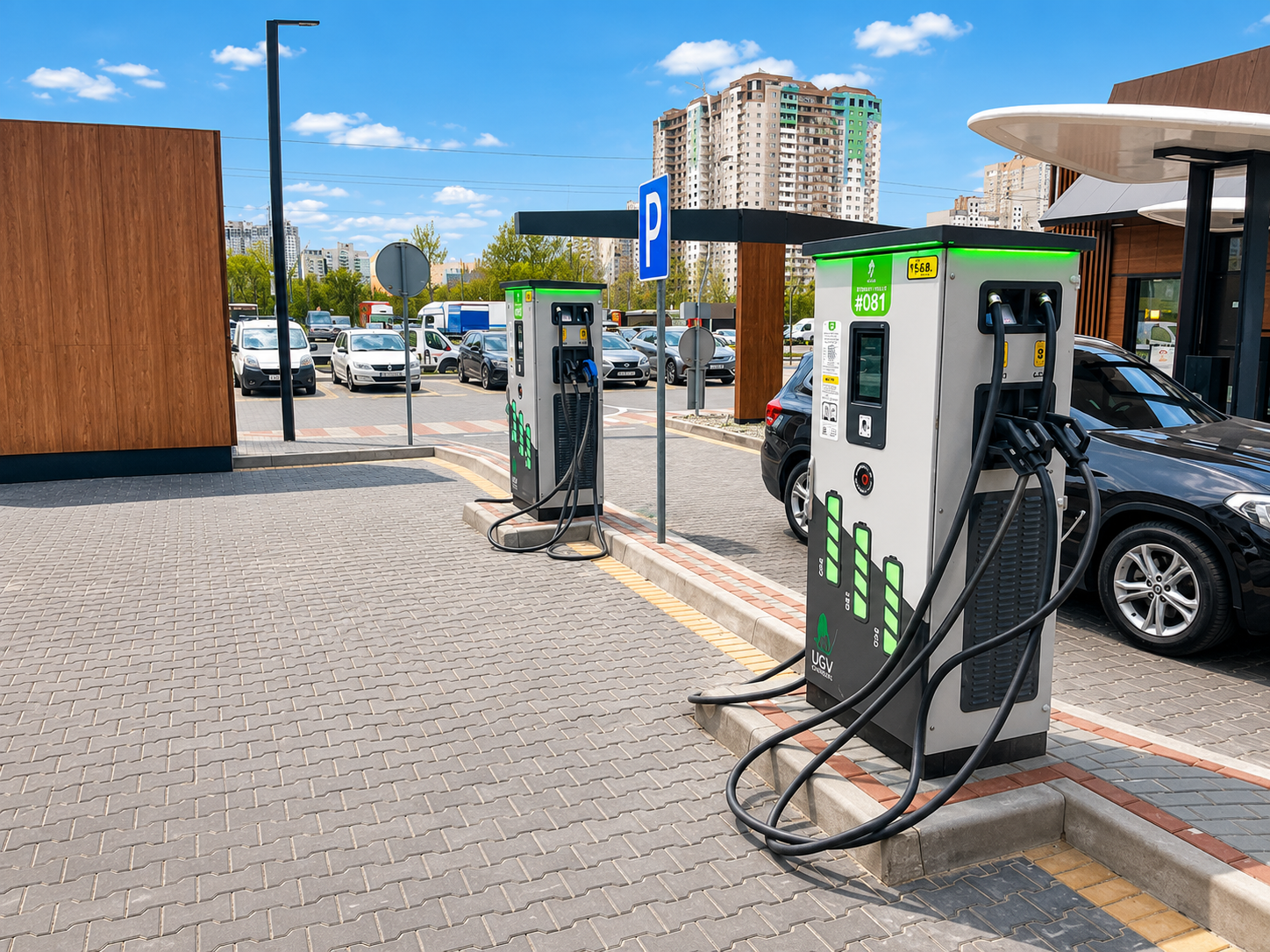
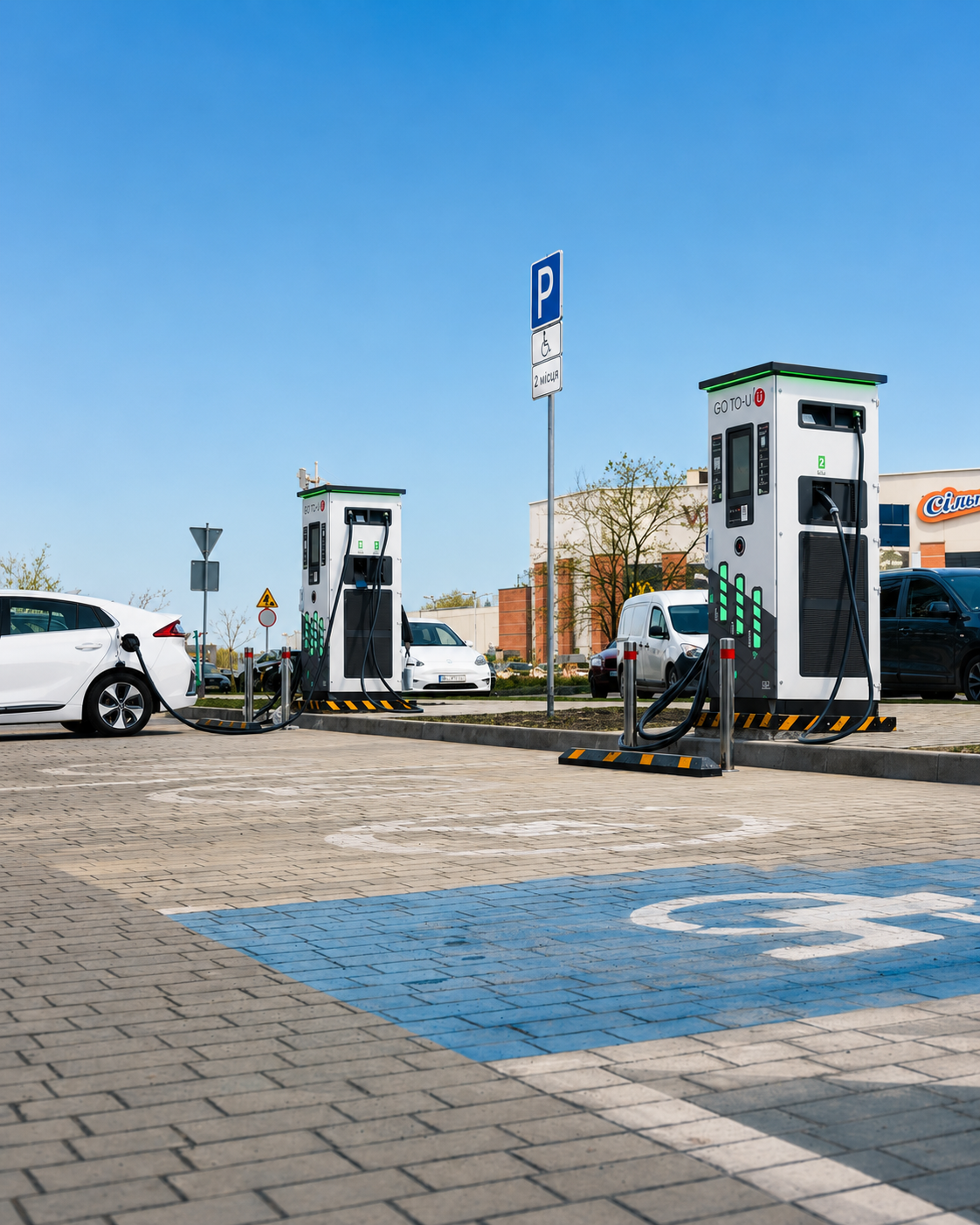
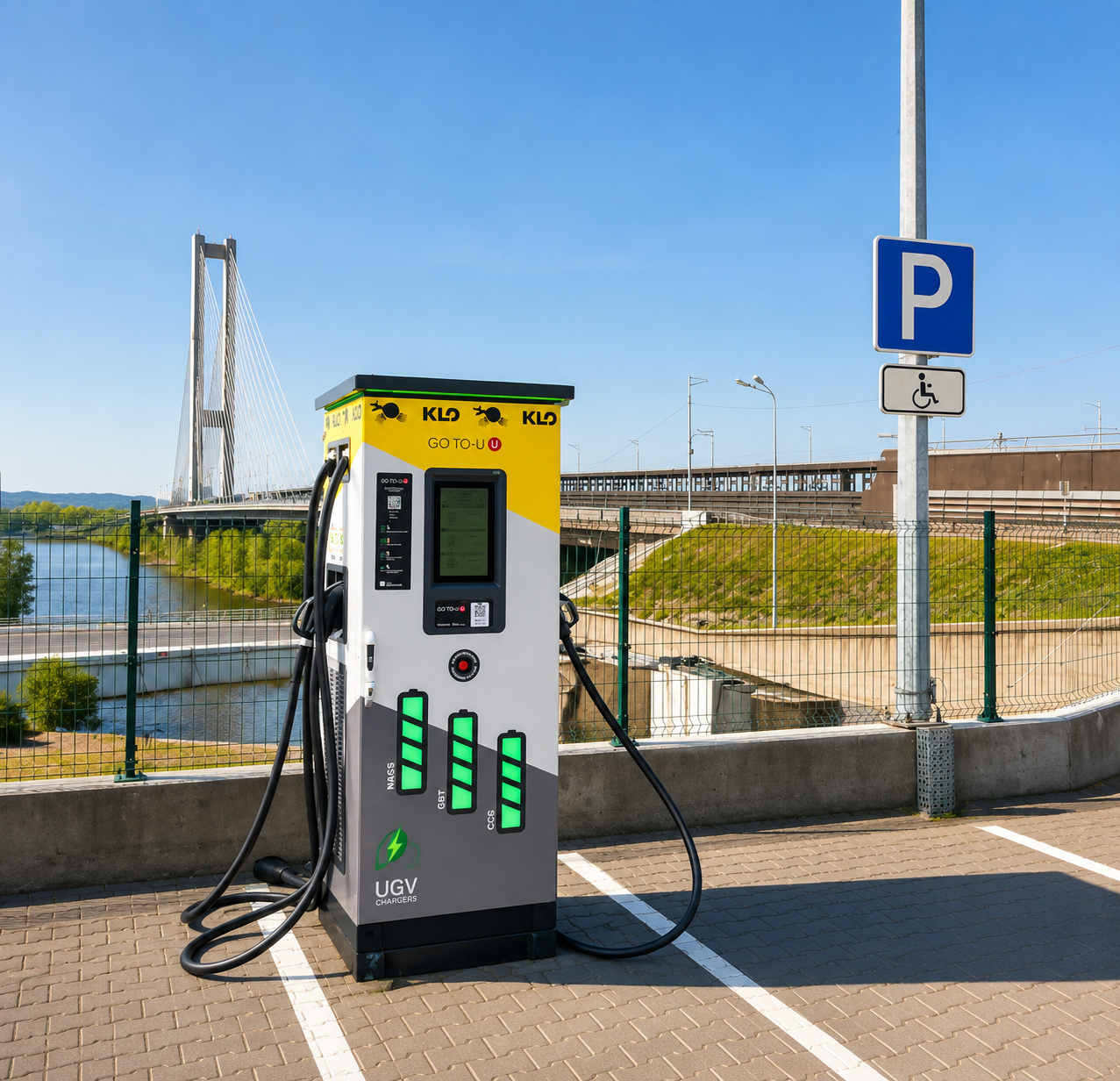
View Models →Real Installations
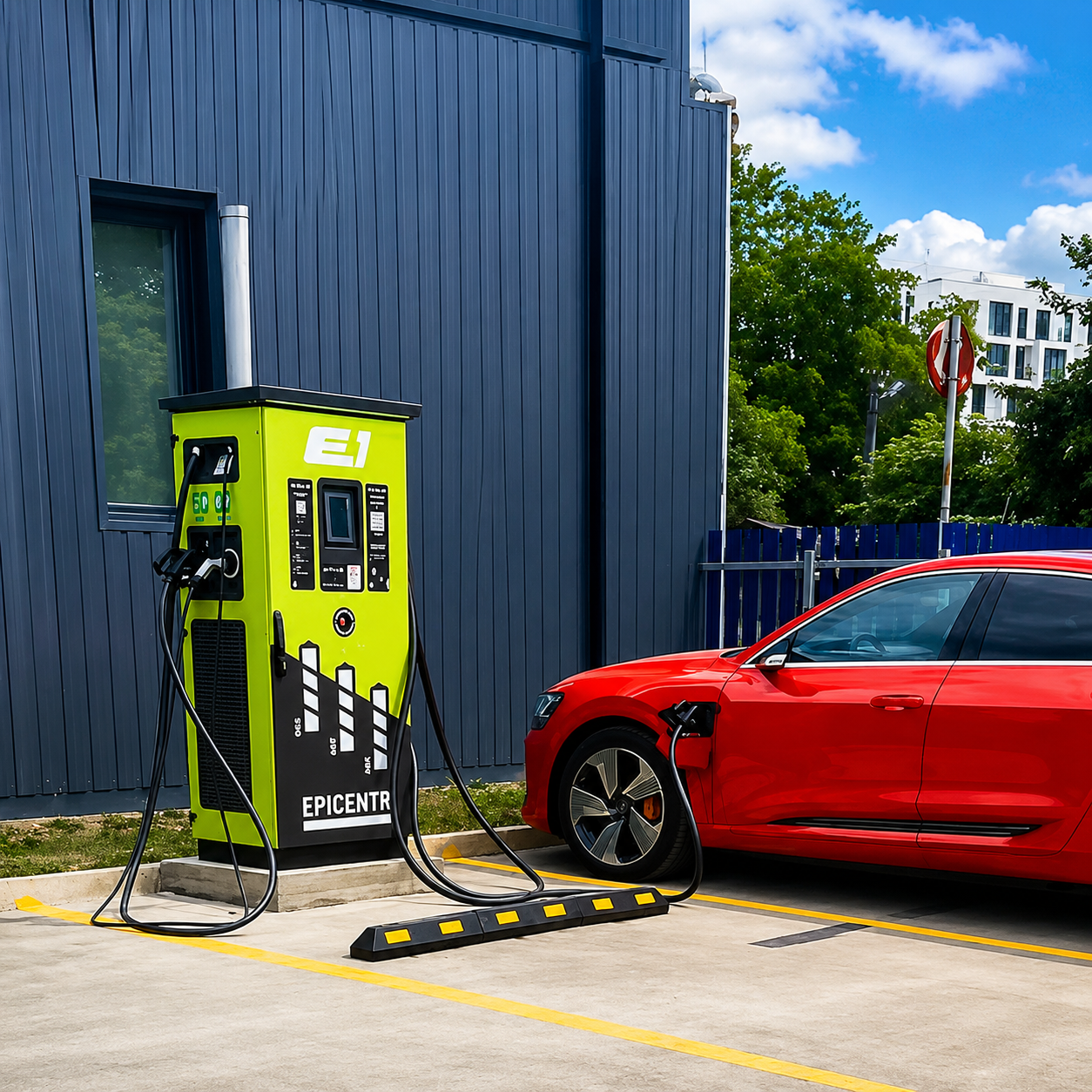
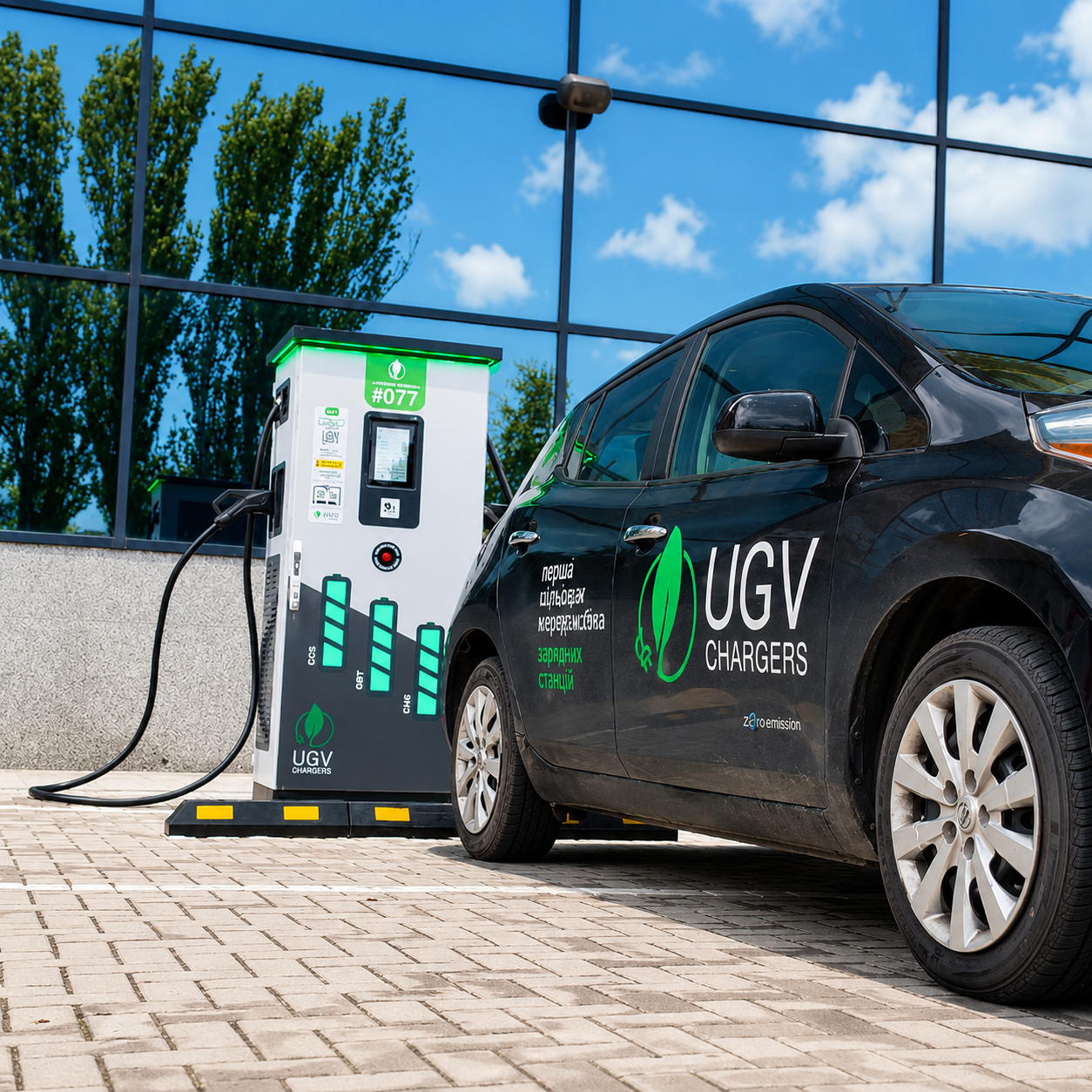
Installed UGV Chargers DC Fast Charging Stations
See installed high-power charging stations from UGV Chargers at commercial and public locations.
Software and Operation
Hardware Is Only One Part of a Charging Location
OCPP, RFID and remote monitoring enable management of connected stations and charging sessions.
✓
OCPP. Integration of the station into a managed system.
✓
RFID and App. Authorisation and user access.
✓
Monitoring. Online monitoring of station status and operation.
Four Inputs Are Enough for an Initial Proposal
You Do Not Need to Choose 80, 160 or 400 kW Yourself
Send us the basic project context. We will recommend the power class, number of ports and configuration according to the project.
01
Location Type
Retail, fuel station, fleet, public car park or charging hub.
02
Number of Vehicles
How many EVs need to charge simultaneously.
03
Available Electrical Capacity
If you do not know it, we will explain what needs to be checked.
04
Stopping Time
Helps determine required charging power and site throughput.
DC Fast Charging Stations
Fast EV Charging for Businesses and Public Locations
UGV Chargers offers DC fast charging stations for commercial projects, public car parks, fuel stations, shopping centres, corporate sites, fleets and charging hubs. Power classes from 40 to 500 kW make it possible to design a solution according to available electrical capacity, number of charging points and expected site demand.
How to Choose the Power of a DC Charging Station
Maximum power is not the only factor when selecting a DC fast charging station. The number of vehicles charging simultaneously also matters, as do average dwell time, daily traffic and electrical connection capacity. A 60 or 80 kW DC station may therefore be suitable for one location, while a busy fuel station or transit point may require 160, 240 kW or more.
At 120–160 kW, dual-port configurations are often used with CCS Combo 2 connectors. Higher power classes of 240–320 kW and 360–500 kW are suitable for projects with higher throughput, multiple parking spaces and simultaneous charging of several EVs. The final configuration should always be selected according to the site's technical conditions.
Multiple Ports and Dynamic Power Distribution
With multi-port DC stations, it is important how available power is distributed between connected vehicles. Dynamic power distribution allows charging to adapt to the current demand of individual EVs and use available station capacity more efficiently. If only one port is active, power does not need to remain permanently reserved for unused connectors.
Depending on the model, UGV Chargers solutions can be equipped with CCS Combo 2 and other connector configurations according to the project. When designing public or commercial charging infrastructure, the appropriate power, number of ports and management method can be combined in one system.
OCPP, Monitoring and Charging Network Management
A modern commercial charging station also needs reliable software management. Selected UGV Chargers stations support OCPP, RFID authorisation, remote monitoring and connection to a software platform. The operator can monitor charging point status, manage users, charging sessions and operation of the entire network.
If you are preparing a new location, UGV Chargers can help assess the appropriate power, number of ports and technical configuration. You can view installed stations on the EV charging station map and explore other solutions in the UGV Chargers DC range.
UGV Chargers Catalogue
Want to Compare AC or Split Solutions as Well?
The catalogue includes the wider UGV Chargers portfolio, available power levels, connectors and configurations.
Product Catalogue
AC · DC · Split
UGV Chargers
FAQ
DC Fast Charging Stations for EVs
Which DC Charging Power Should I Choose? +
The choice depends on available electrical capacity,
number of parking spaces, expected charging demand,
location type and vehicle dwell time.
Which Power Levels Are Available in This Category? +
The current product range on this page includes
configurations from 40 to 500 kW, including multi-port DC
and combined DC + AC solutions.
What Is Dynamic Power Distribution? +
On supported multi-port DC models, available power
can be redistributed between active ports according to current vehicle demand.
Can the Stations Be Connected to Software? +
Yes. Specific OCPP, authorisation,
connectivity and software-management options are shown
for each individual model.
What Should Be Checked Before Installation? +
In particular, electrical grid capacity, installation location,
cable routes, number of parking spaces,
data connection and planned operating scenario.
DC Solution Proposal
Send Us Your Location. We Will Recommend the Right DC Configuration.
You do not need to know the exact power or number of ports. For an initial proposal, location type, number of vehicles, available electrical capacity and required charging time are enough.
If available, include:
location type
number of vehicles
available electrical capacity
charging time
Non-Binding DC Station Proposal
40–500 kW · multi-port configurations