
EV Charging Stations for Motorways and High-Capacity Charging Hubs
UGV Chargers designs charging solutions for motorway junctions, service areas, fuel stations and busy transit locations. From a single DC station to a multi-port charging hub with central power management.
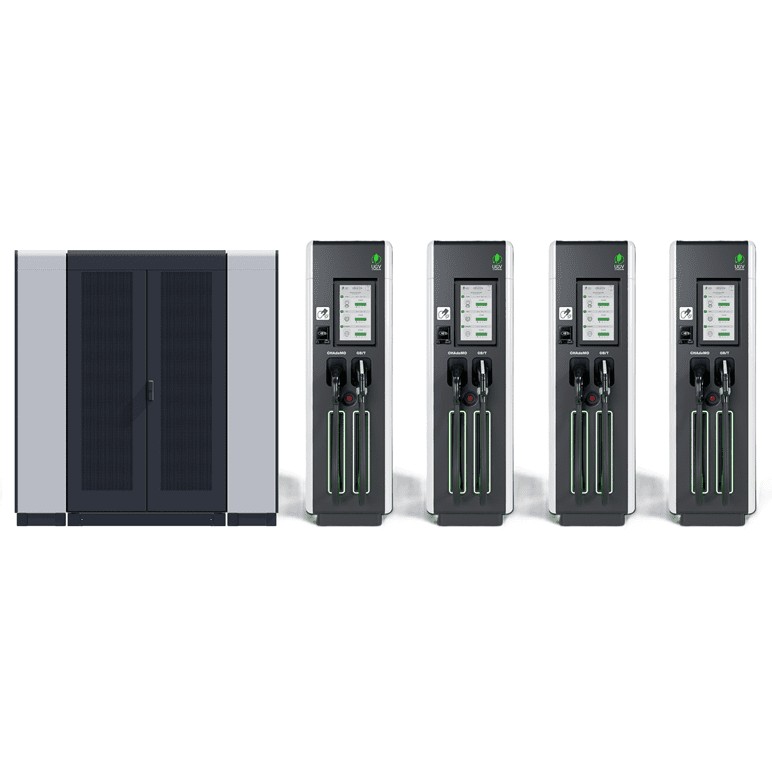
What do you want to build at the site?
You do not need to start with a specific power level. First, define the site type and expected operation.
One fast DC charging station
For a location with a lower initial number of charging sessions and the option to expand later.
View solution →Multi-port fast charging
For busy locations that need to serve multiple EVs simultaneously.
View HPC solution →Complete charging hub
For multiple parking spaces and central power management with future site expansion in mind.
View split charging hub →Motorway charging depends on capacity, speed and availability
The site must handle short stops, simultaneous arrival of multiple vehicles and stable operation throughout the day.
High power
Fast DC charging supports shorter stops and higher vehicle turnover.
Multiple vehicles at once
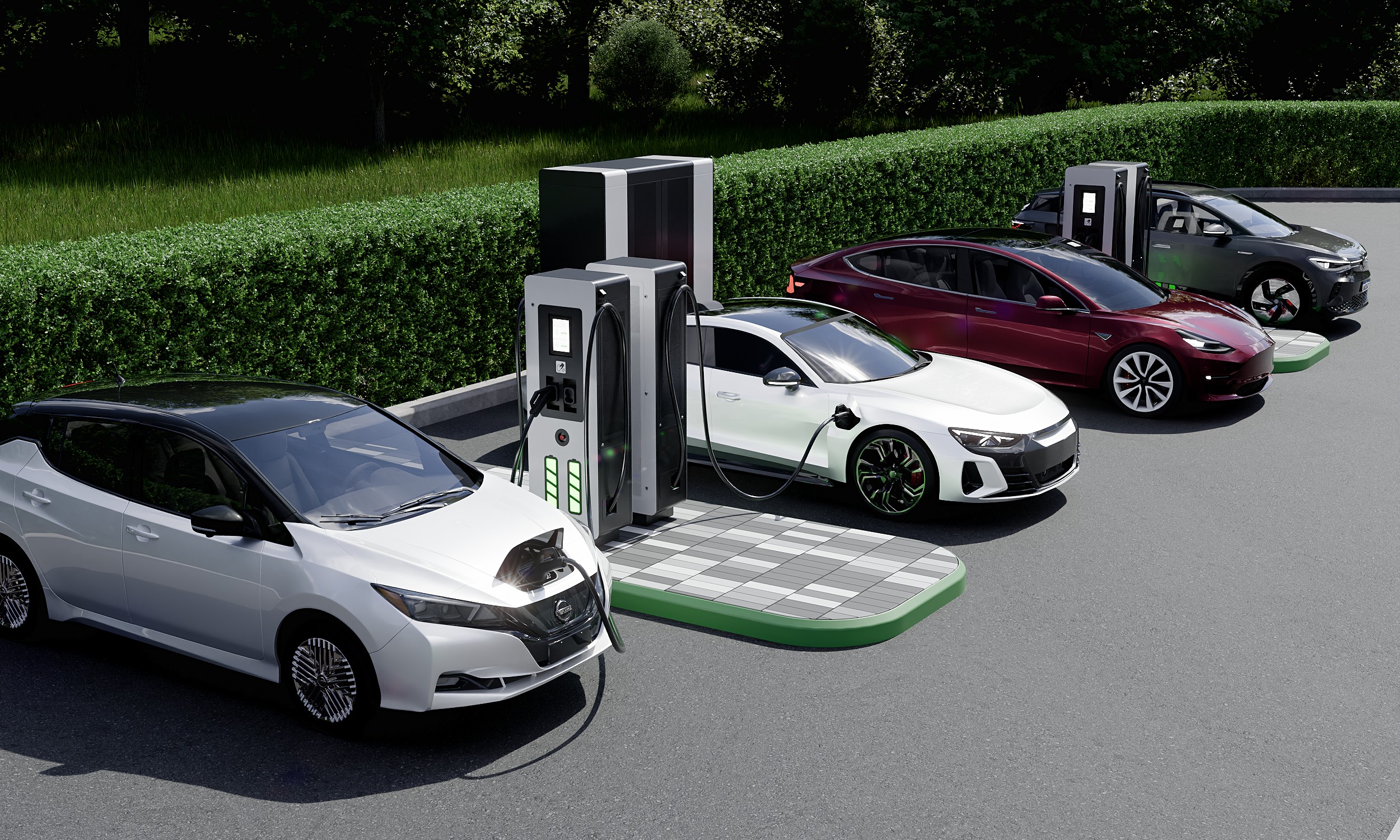
A multi-port architecture increases site capacity during traffic peaks.
Simple payment
A public location should be easy to use even for a driver using the network for the first time.
Online management
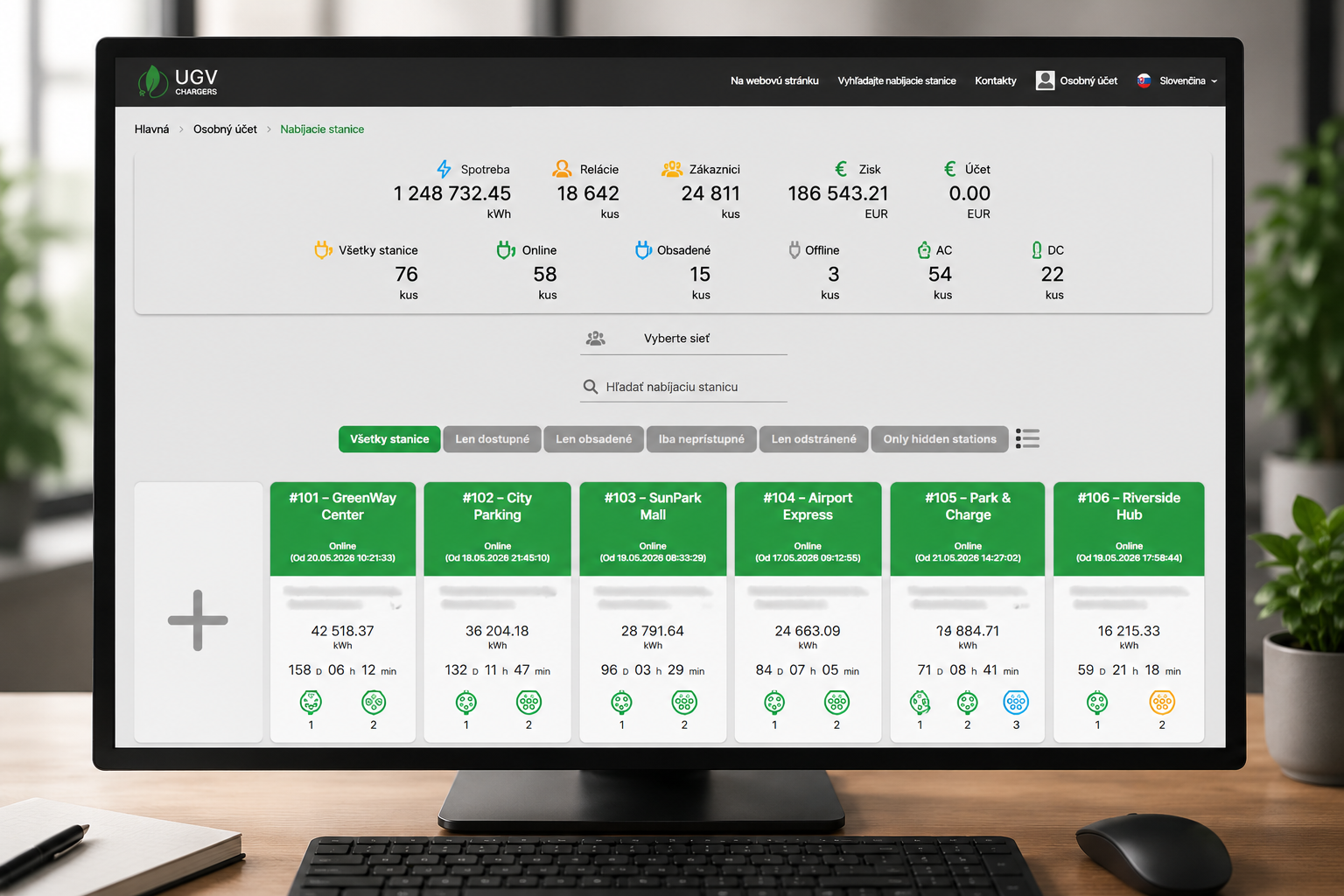
The operator needs visibility into stations, ports and charging sessions.
From one DC point to a high-capacity hub
The right architecture depends on site operation, available electrical capacity and planned growth.
Standalone DC station
For a service area or location with lower initial demand.
Multi-port DC station
For busy locations where multiple vehicles need to charge simultaneously while using available power efficiently.
Split charging hub
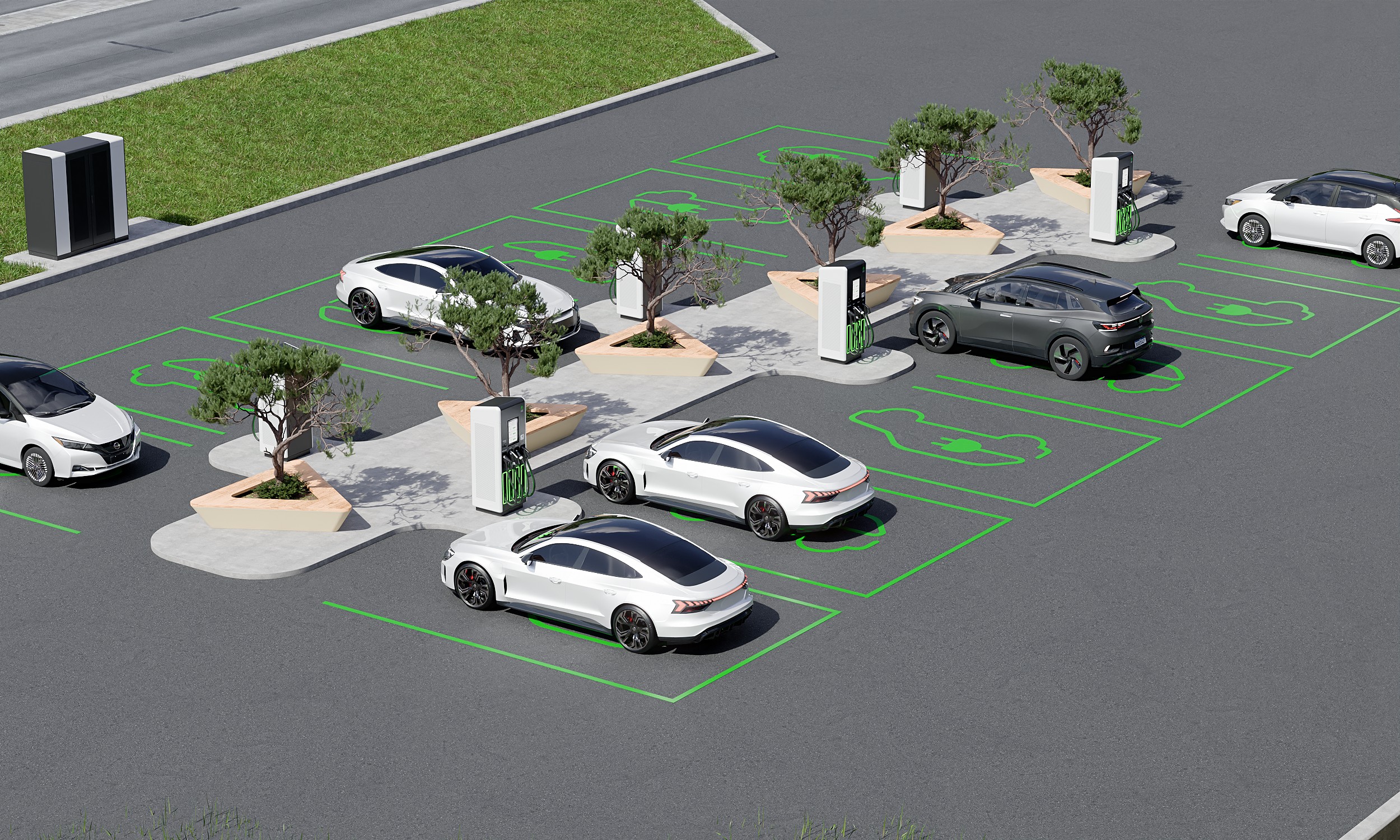
A central power unit and separate dispensers at parking spaces for large sites.
Power where the vehicle needs it
With supported multi-port configurations, available DC power can be dynamically distributed between active ports according to the current demand of connected vehicles.
The power unit does not need to stand next to every vehicle
In a split charging solution, the power unit is separated from the charging dispensers. At the parking spaces, compact charging points remain while power is managed centrally.
Simple charging for drivers, control for the operator
Motorway locations are used by drivers from different countries. That is why simple charging activation should be combined with online site management.
You do not need a finished charging hub project
To begin, we only need basic project context. We will refine the technical architecture together with you.
Location
Motorway, service area, fuel station or standalone charging hub.
Expected operation
Expected number of vehicles and possible traffic peaks.
Available electrical capacity
Existing electrical connection and expansion options.
Number of spaces
Number of charging points today and planned site growth.
A charging hub can be part of a broader energy concept
For complex projects, depending on site conditions, additional energy and service elements can also be considered.
Energy storage
Battery energy storage can be part of a comprehensive energy solution.
Photovoltaics
Solar panels can complement the energy concept or a charging canopy.
Service zone
A shop, café or other services can make use of the driver's charging time.
Want to compare available configurations?
The catalogue includes fast DC charging stations and high-power solutions for larger locations. For a specific hub, we recommend a design based on actual site conditions.
Frequently Asked Questions Before Designing Motorway Charging
What charging power is suitable for a motorway station? +
How many EVs can a charging hub serve simultaneously? +
How does power distribution between vehicles work? +
Can a driver pay without registration? +
Can the charging hub be expanded later? +
Can the hub be combined with BESS and photovoltaics? +
Send us your site details. We will design the architecture together.
You do not need to know the exact power or number of stations. For an initial proposal, basic information about the location, available electrical capacity and planned number of charging points is enough.