
EV Charging Stations for Fuel Stations
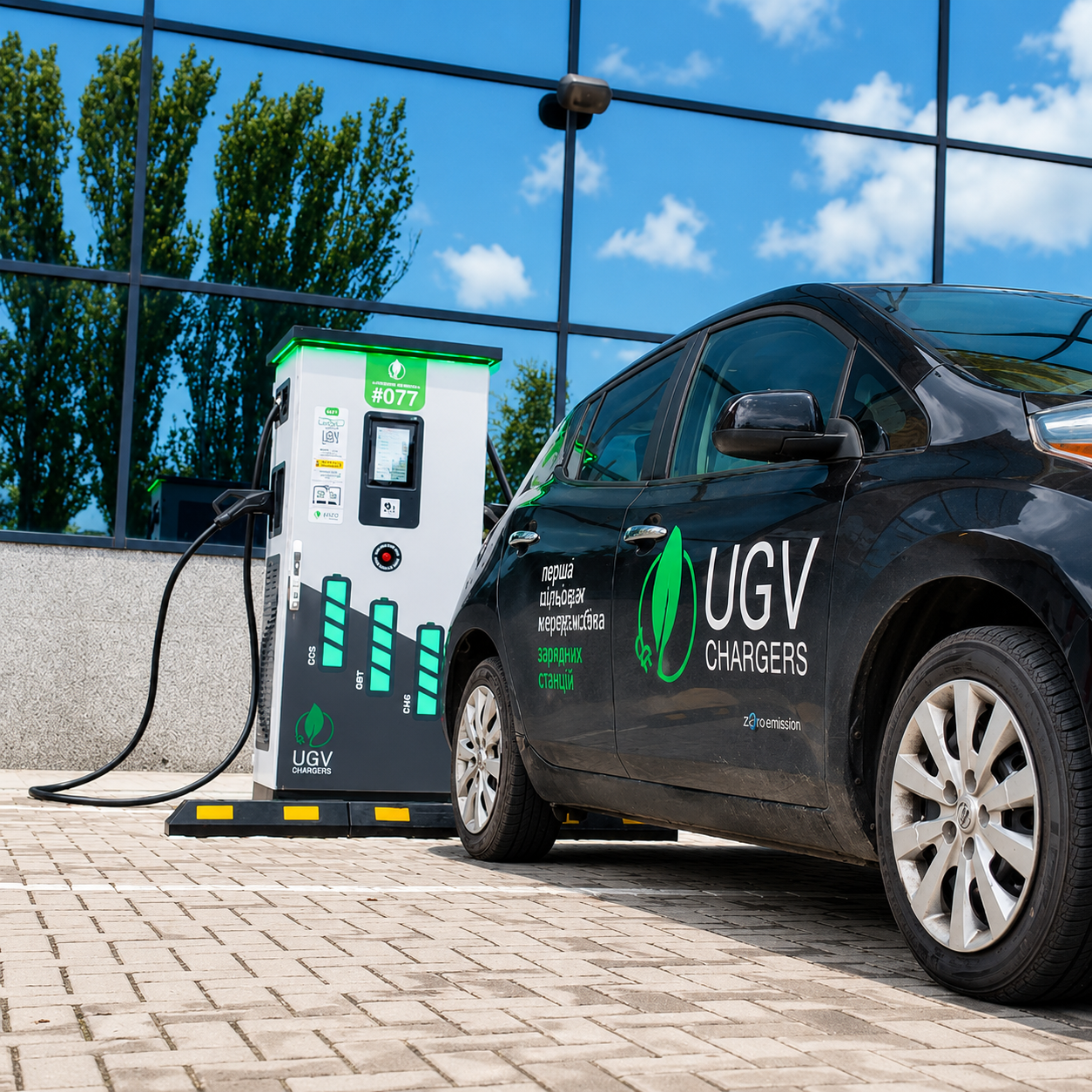
Expand your fuel station services with fast EV charging. UGV Chargers offers DC charging stations from 40 to 1125 kW with card payment support, OCPP and the ability to charge multiple vehicles simultaneously.
Why add EV charging to a fuel station?
An EV charging station at a fuel station is more than an additional service — it expands the site's offer and prepares it for the growing number of electric vehicles on the road.
A new service for EV drivers
EV charging is a natural extension of a fuel station's services alongside conventional refuelling. A charger can attract a growing group of drivers who might otherwise pass the location by.
Higher site traffic potential
While the vehicle is charging, the driver has time to visit the shop, café or other services at your fuel station instead of leaving during the wait.
Additional revenue stream
A paid charging station works as a standalone commercial service and can generate revenue from its operation rather than serving only as a free customer benefit.
A location ready for e-mobility
A fuel station with DC charging is better prepared for the future of transport without changing its core business model.
Why DC charging matters at fuel stations
Drivers at a fuel station do not want to wait for several hours. That is why fast DC charging stations are especially suitable for this type of location, unlike restaurants or hotels where slower AC charging can also make sense during longer stays.
Charging speed depends on station power, the vehicle, battery state of charge and its charging curve. High-power DC solutions are designed to deliver as much energy as possible during a typical stop.
What DC charging power should you choose?
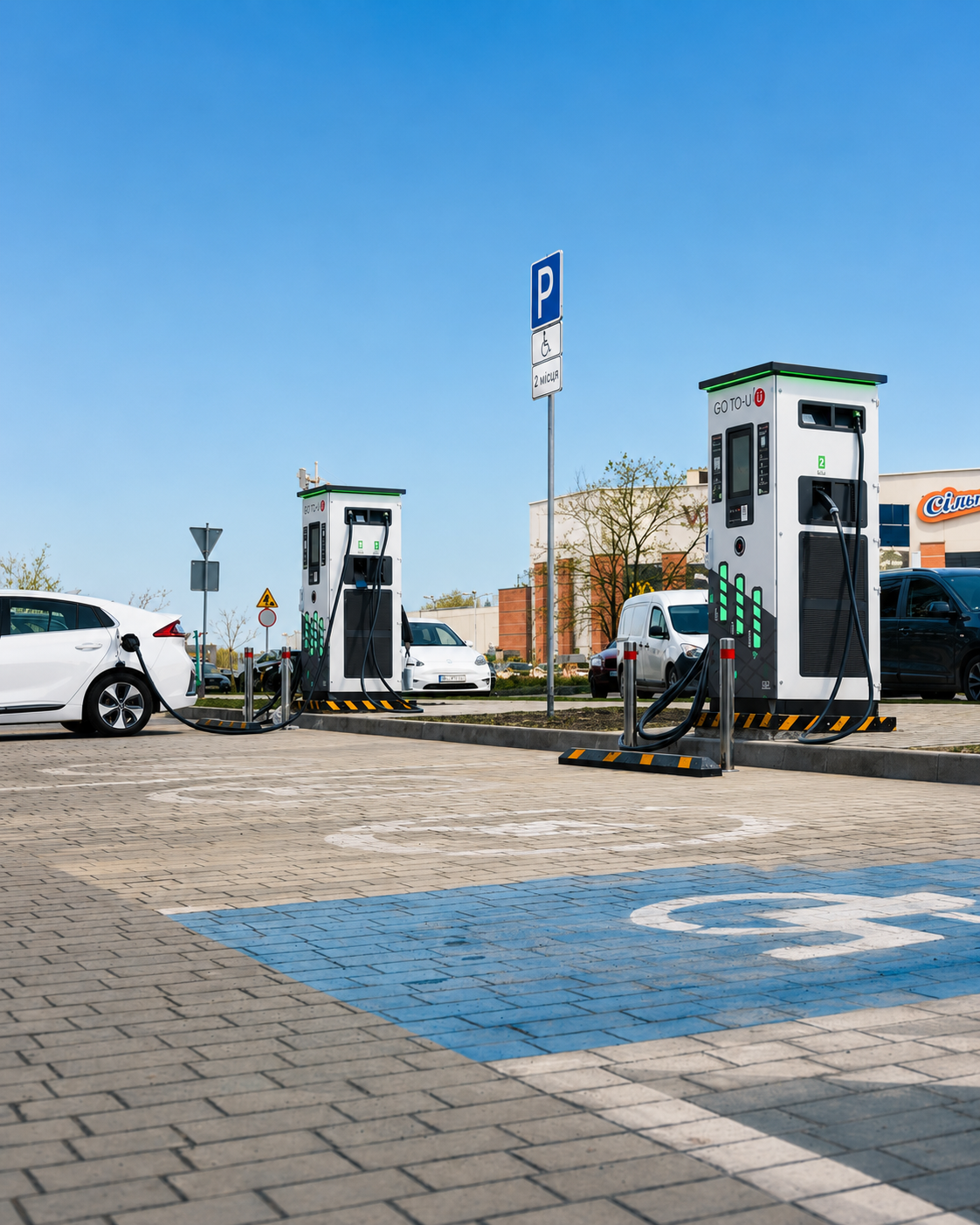
UGV Chargers offers fast DC stations from 40 to 1125 kW, including multi-port solutions with dynamic power distribution. The right power level depends on traffic intensity and the available electrical connection at your site.

40–80 kW
Smaller and local fuel stations.

120–160 kW
Busy locations and main routes.
240–320 kW
High vehicle turnover and transit traffic.

400 kW
Motorway hubs and high-traffic locations.
Charging connectors for different electric vehicles
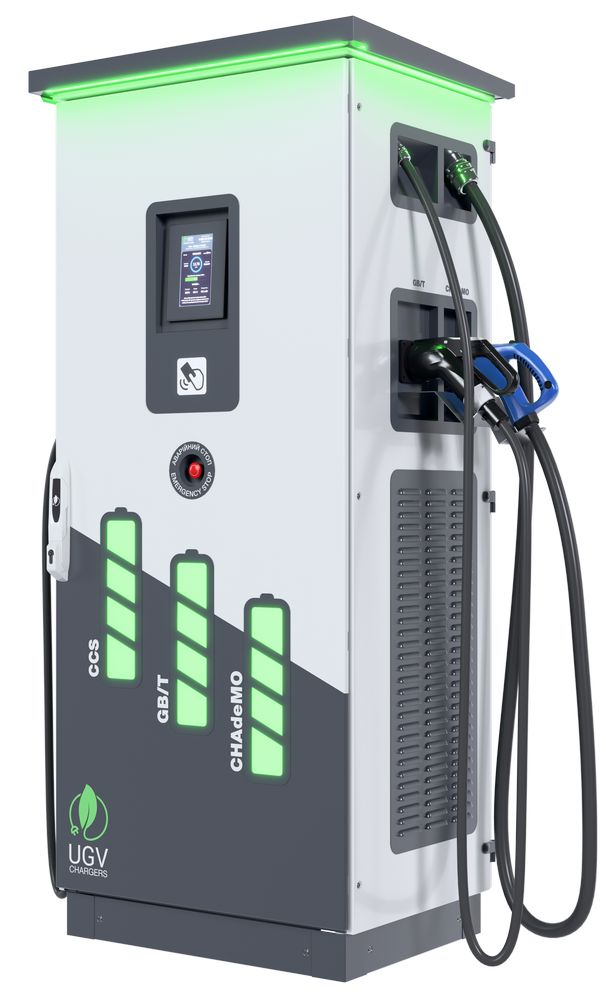
The main fast-charging standard in Europe is CCS2 — all UGV Chargers fuel-station solutions can be configured with it.

CCS2 — the main standard
Depending on the market and site requirements, additional connector options are available on request:
One station, multiple vehicles charging
Simultaneous charging of multiple EVs
A multi-port charging station can charge two or more vehicles at the same time. Depending on the selected configuration, one UGV Chargers station can serve several EVs simultaneously, which is important for high-traffic fuel stations.
Dynamic power distribution
If one vehicle needs less power or finishes charging, the available power is automatically redirected to another active port. Dynamic power distribution therefore uses the station's available capacity more efficiently than a fixed power split.
Card payment without registration
Payment terminal directly on the station
The driver can start charging and pay by bank card without registering in an app — exactly what drivers expect at a public fuel station. A charging station with a payment terminal is therefore simple to use for occasional users.
RFID and mobile app
RFID cards and the UGV Chargers mobile app are also available for regular drivers and business customers. Your station can also appear on the EV charging station map, which EV drivers can use when planning their route.
OCPP
OCPP 1.6 support enables commercial EV charging with remote management, monitoring and straightforward integration into your operating network.
How can an EV charging station generate revenue?
A fuel-station charging service can use several commercial models, and they can be combined depending on how you want to offer charging to customers.
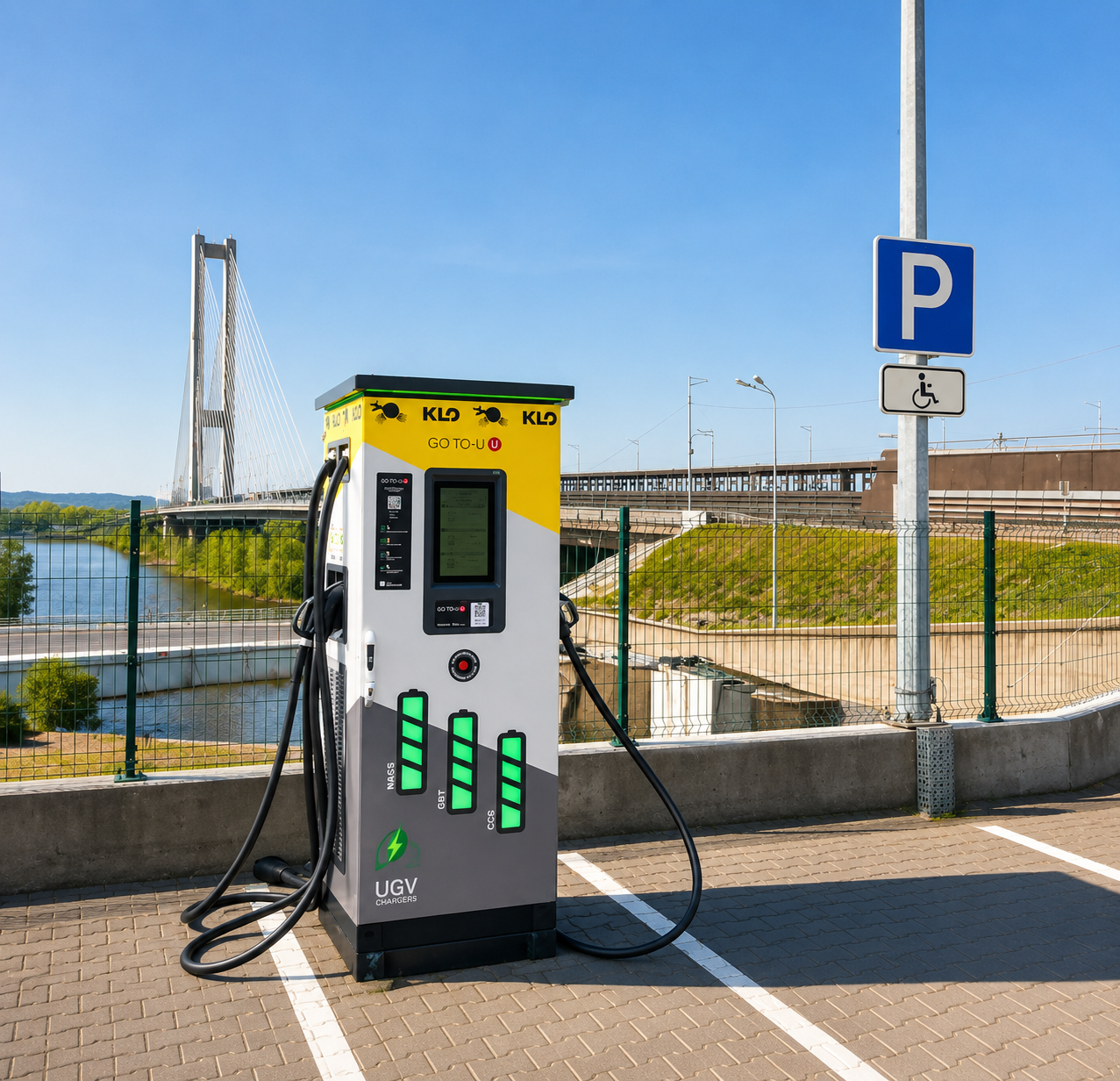
EV charging for a motorway fuel station
Drivers on transit routes expect fast motorway charging that minimises stop time and provides simple, reliable payment.
How to choose the right solution for your fuel station
Traffic intensity
The number of vehicles passing your site each day helps determine the required charging throughput.
Available electrical capacity
The actual available grid connection determines how much DC charging power can be installed at the site.
Number of parking spaces
How many EVs can be served simultaneously without disrupting other on-site operations.
Average stop duration
Shorter stops generally require higher charging power so drivers can add enough energy before leaving.
Planned business model
Free customer service, paid public charging or part of your own charging network.
How does implementation with UGV Chargers work?
From the first consultation to commissioning, the project typically follows five steps.
Technical consultation
We review your requirements and site conditions.
Site and power assessment
We determine the DC charging power that can realistically be connected at the site.
Configuration design
Power, number of ports and connectors are selected according to site requirements.
Installation and connection
Site preparation and charging station connection.
Commissioning, tariff and monitoring
Configuration of tariffs, network connection, OCPP and remote management.
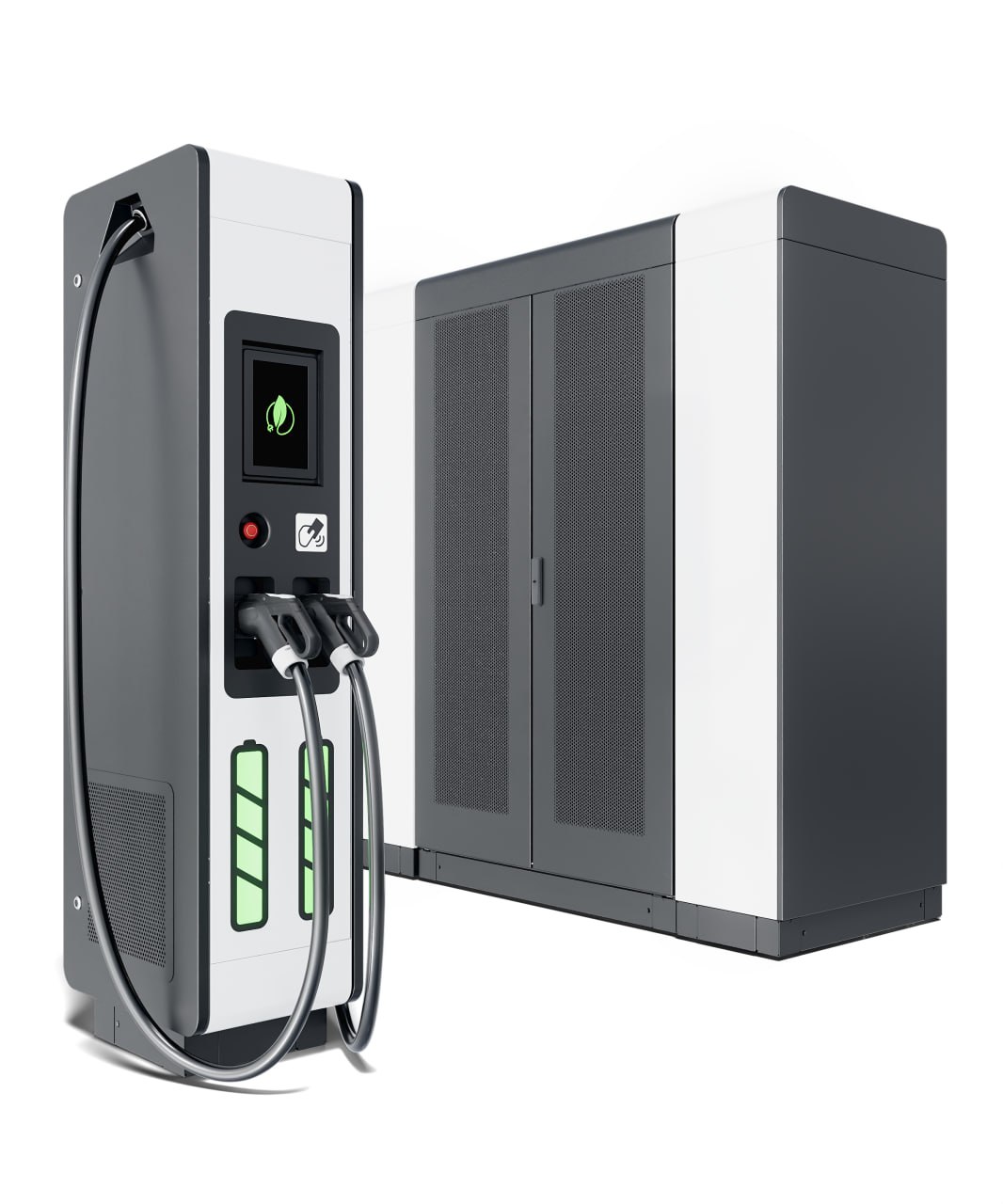
Split DC Charging Systems for Fuel Stations
At larger fuel stations and busy locations, the entire power system does not need to be installed next to every charging bay. A split charging architecture separates the central power unit from compact charging dispensers next to the vehicles.
This makes it possible to create a cleaner charging zone, use available space efficiently and serve multiple EVs from one power unit.
Power unit separated from charging bays
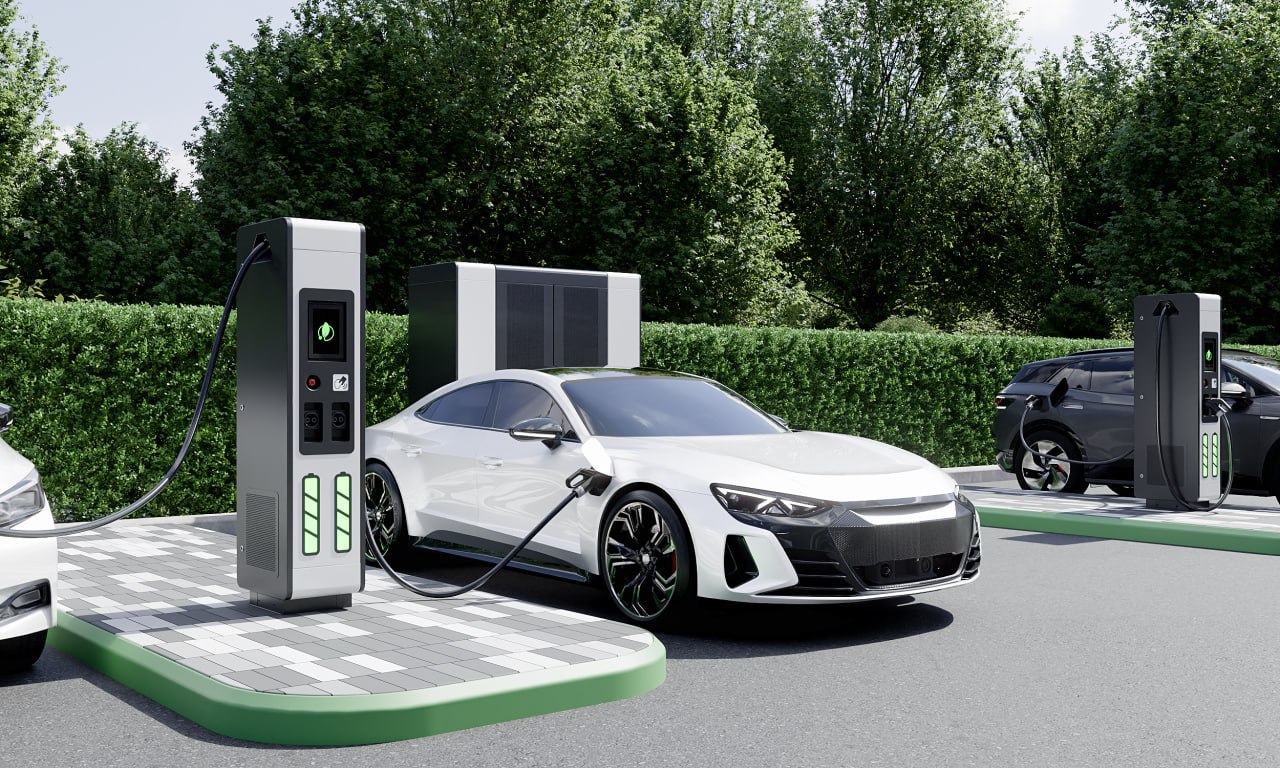
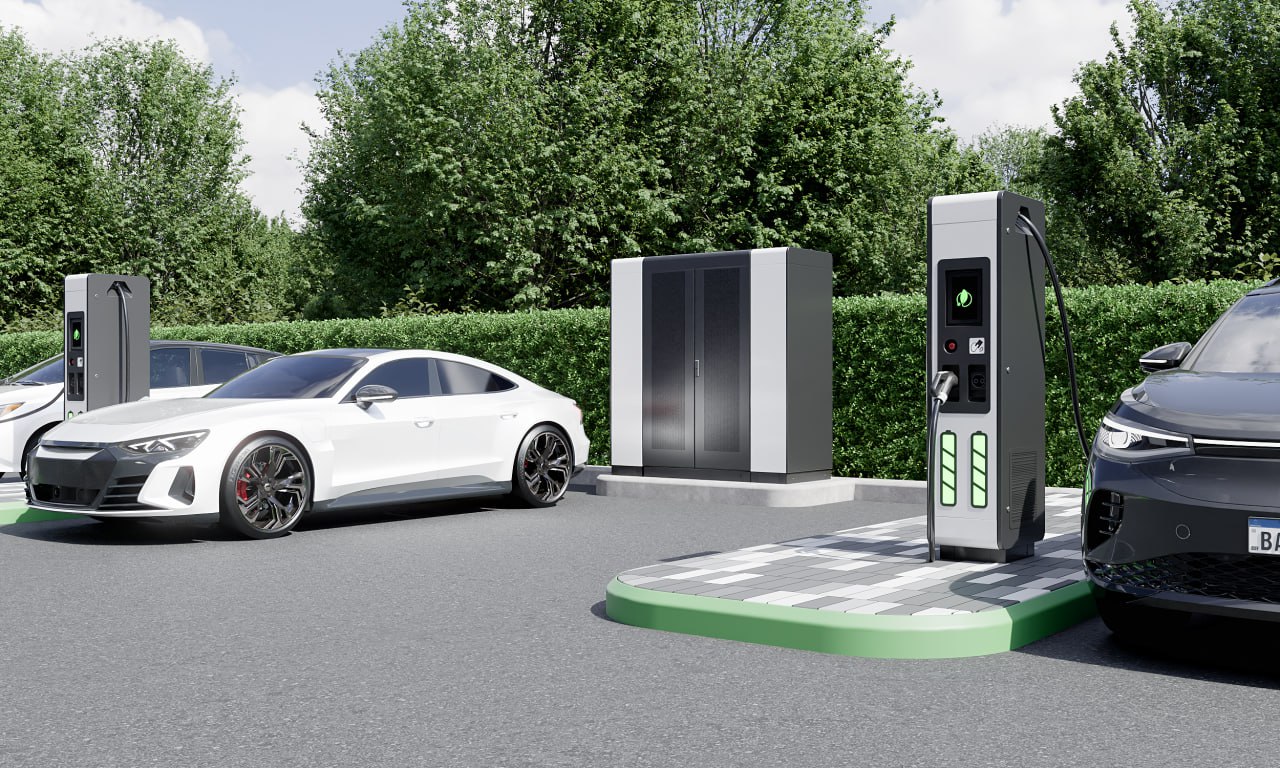
The main power unit can be installed away from the immediate parking area. Only compact DC charging dispensers with charging cables remain next to the vehicles.
More charging bays at one location
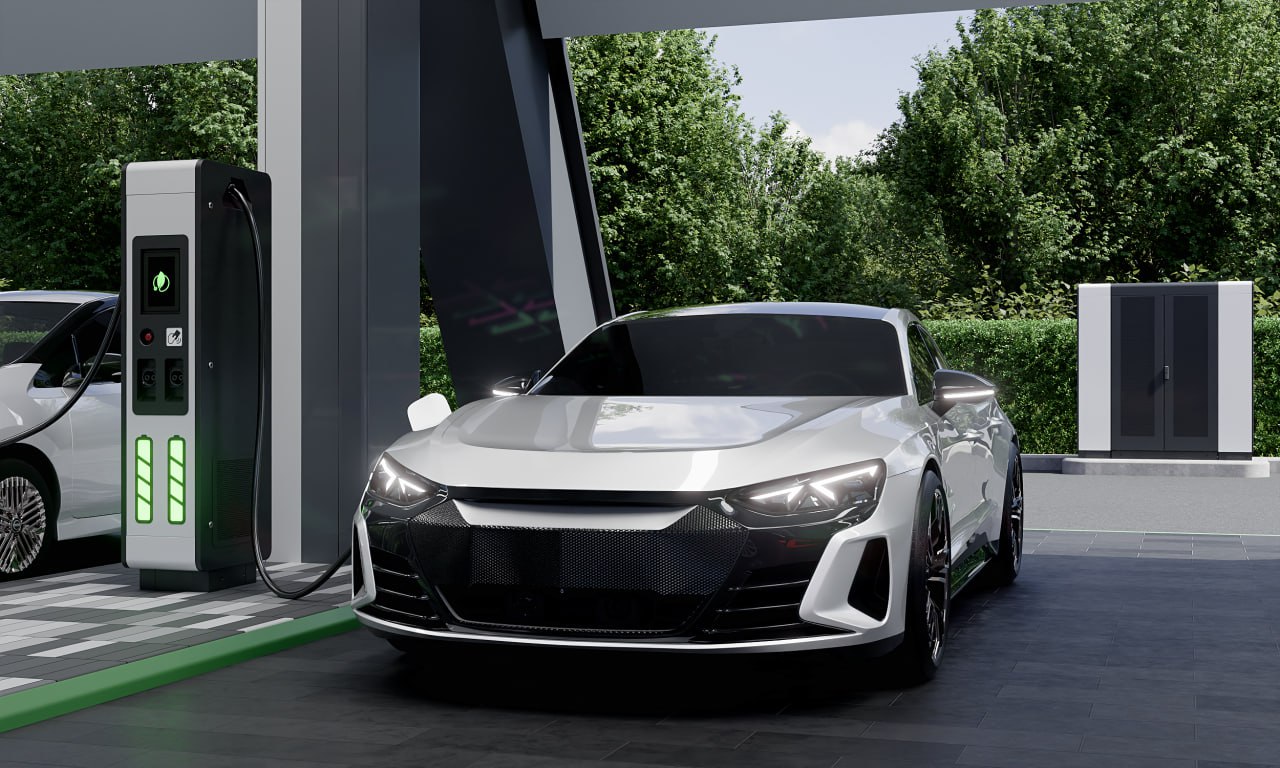
A split system is suitable where several separate charging bays are needed without placing a large standalone DC charger beside every vehicle.
Dynamic power distribution
The power unit intelligently distributes available power between individual dispensers.
Designed for future expansion
Split architecture is suitable for fuel stations, motorway locations and charging hubs where a larger number of charging bays and future expansion are planned.
Why UGV Chargers?
How much does an EV charging station for a fuel station cost?
The price of a DC charging station depends on required power, number of charging ports, connector configuration, payment terminal and the technical conditions of the site. A precise quotation can be prepared after checking the available electrical capacity and traffic profile of your fuel station.
Frequently Asked Questions
What DC charging power do I need?+
How much does an EV charging station for a fuel station cost?+
Can one station charge multiple vehicles simultaneously?+
Can drivers pay by card without an app?+
How is a DC charging station installed?+
Can I connect the station to my own charging network?+
Design the right EV charging solution for your fuel station
Send us a few basic details about your location and we will recommend a suitable power level and prepare an indicative quotation — with no obligation.