
EV Charging Calculator
Select your EV, battery level and charging power. The calculator estimates charging time, energy, cost and added driving range — and shows which UGV Chargers power level is technically appropriate.
What You Can Calculate in Seconds
Set 4 Inputs and Compare the Result
The calculation is indicative. For DC charging, we use a simplified model that reduces charging power at higher states of charge.
Electric Vehicle
parameters are filled in automaticallyState of Charge
DC power usually decreases at higher SoCCharger Typee and Power
Electricity Price
enter your price per 1 kWhHigher Charger Power Does Not Always Mean Shorter Charging Time
The vehicle's own charging limit also matters. The calculator therefore compares station power with the selected vehicle's maximum AC or DC charging power.
The Vehicle Has Its Own Limit
If a vehicle accepts a maximum of 100 kW DC, connecting it to a 400 kW charger will not make it charge at 400 kW.
Charging Power Changes Above 80%
In many EVs, DC charging power gradually decreases as the battery fills. That is why charging from 80% to 100% can take disproportionately longer.
The Cost Is an Estimate
You enter your own price per kWh. The actual amount may depend on the tariff, charging operator, parking time and additional fees.
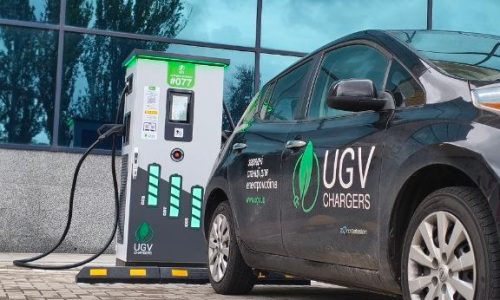
How the Calculator Estimates Charging Time
First, the calculator determines the energy required to move from the starting to the target battery level. For AC charging, it uses the lower value of station power and the vehicle's onboard charger limit.
For DC charging, it uses the vehicle's maximum DC charging power and a simplified model of power reduction at higher states of charge. The result is therefore indicative, not a homologated charging figure.
Choose the Charging Typee Based on How Long the Vehicle Is Parked
For the driver, charging time matters. For the operator, vehicle volume, site electrical capacity and how the location is used are equally important.
| Scenario | Type | Typeical Approach | Key Factor |
|---|---|---|---|
| Longer Parking | AC | 11–22 kW per port | parking duration and onboard charger limit |
| Corporate / Shared Parking | AC | multiple ports + power management | number of vehicles and available electrical capacity |
| Short Stop | DC | 40–160 kW | vehicle DC limit and site turnover |
| Transit / High Turnover | DC / HPC | 160–400 kW | vehicle charging power, number of ports and peak demand |
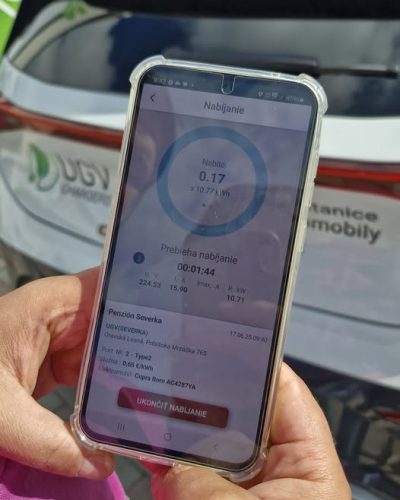
What Affects Actual Charging Time
The same vehicle can achieve different average charging power at the same station under different conditions.
Use the Result to Plan Your Next Step
Find a charging station on your route or explore UGV Chargers solutions for commercial locations.
Frequently Asked Questions
How Long Does It Take to Charge an EV?+
Why Does DC Charging Slow Down at a Higher State of Charge?+
Is a Higher-Power Charging Station Always Better?+
Is the Cost Calculation Exact?+
How Do I Choose Charging Power for a Business?+
Need a charging solution for a real location?
Send us basic information about the location. UGV Chargers will help define the appropriate power, number of charging points and configuration for the real operating scenario.